
December 3, 2026 | HAL Management Academy, Bengaluru
Venue: HMA, Marathahalli Bangalore
| Start Time | End Time | Topic | Hall | Speaker |
|---|---|---|---|---|
| 10:00 AM | 12:30 PM | Workshop 1: AI-Driven Systems Engineering: Transforming MBSE with Intelligent Augmentation | Hall 1 | Mr Marco Ferrogalini |
| 10:00 AM | 12:30 PM | Workshop 2: Validating Safety Critical Control Systems with Agentic AI for DO333 Compliance | Hall 2 | Dr Yogananda Jeppu |
| 9:00 AM | 1:00 PM | Academia - Industry Round table | Hall 3 | |
| 12:30 PM | 1:30 PM | Lunch | ||
| 1:30 PM | 4:00 PM | Workshop 3: "Planning for Project Success by Synergising project management and systems engineering" | Hall 1 | Dr Stephen Cook |
| 1:30 PM | 4:00 PM | Workshop 4: "Systems Engineer's Toolkit: Workshop on communication, Influence, and Decision-Making" | Hall 2 | Stueti Gupta |
| 1:30 PM | 4:00 PM | Open Networking | Hall 3 | |
| 4:00 PM | 4:30 PM | High Tea |
Model-Based Systems Engineering (MBSE) is rapidly evolving through the integration of artificial intelligence and machine learning. This interactive workshop Explores how AI can enable requirements traceability, optimize system architecture design, and streamline dynamic modeling workflows. Participants will co-envision how AI can enable design iterations, improve system engineering consistency, and accelerate compliance checking. Real-world case studies could be examined where measurable efficiency gains and reduced development cycles across complex systems had been realized. Objective is to converge onto actionable strategies and best practices to integrate AI capabilities into existing MBSE pipelines.
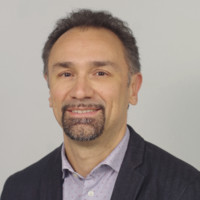
Marco Ferrogalini is "Vice President & Head of Sys.Eng. / Model Based Sys.Eng," currently leads Systems Engineering and Model-Based Systems Engineering (MBSE) across the entire Airbus Group, having joined in 2019 to direct digital transformation for the Modelling and Simulation stream within the Digital Design, Manufacturing, and Services (DDMS) program across commercial aircraft, defense and space, and helicopter divisions. Throughout a career he has been specialized in complex vehicle systems engineering activities, especially in systems development and integration spanning sports cars, rolling stock, and since 2019, aerospace systems. He has always operated along two axes: one driving continuous improvement through processes, methods, and tools, and the other managing large operational engineering teams during project execution. He has extensive technical expertise in modelling and simulation approaches (FEM, vehicle dynamics, CFD, and acoustics), Marco has spent the last two decades pioneering, leading and scaling MBSE for operational analysis and functional/logical architectures - first at major rail OEMs Alstom and Bombardier, and now at Airbus, where he oversees end-to-end implementation including processes, methods, tools, training, coaching, and change management. An active contributor to the INCOSE network and a guest lecturer at numerous engineering institutions, Marco has been certified as an INCOSE Certified Systems Engineering Professional (CSEP) since January 2013.
How do you demonstrate that a safety-critical control system, and the software implementing it, behaves exactly as intended? This workshop provides a practical introduction to DO-331 Model-Based Development and Verification and DO-333 Formal Methods, with a focus on applying them to aerospace control systems. Using examples such as PID controllers and gain-scheduled control laws, we will together explore how requirements can be translated into verification objectives and credible evidence.
The workshop will introduce and demonstrate requirements-based testing, formal methods, assertions, random testing, mutation testing, and test optimization. Participants will see how these techniques complement each other to verify controller behavior, explore corner cases and operating boundaries, validate gain schedules, and identify behaviors that conventional testing may miss.
A special focus will be placed on the emerging role of Agentic AI in verification and validation. Can AI help generate tests, identify corner cases, propose assertions, analyze results, improve requirements traceability, and accelerate the verification process? Through demonstrations, we will explore both the opportunities and the practical limitations of using AI in safety-critical engineering.
The workshop will bring together control engineers, software and verification engineers, systems engineers, certification specialists, and researchers to discuss current practices, industry challenges, and emerging approaches. Presentations and hands-on demonstrations will provide an opportunity to understand not just what DO-331 and DO-333 require, but how these methods can be put into practice for real-world safety-critical control systems.
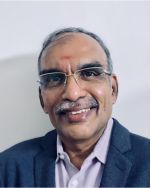
Dr. Yogananda Jeppu is a Technical Fellow and Systems Architect at Boeing, with over 38 years of experience in control-system design and implementation, aerospace-system simulation, and verification and validation of safety-critical systems. His career spans major aerospace and defence programs including the Indian Light Combat Aircraft (LCA), Akash Missile System, SARAS aircraft, Boeing 747-8, Airbus A350, Gulfstream and COMAC C919. His areas of expertise include Model-Based Systems Engineering, Model-Based Verification and Validation, Formal Methods, safety-critical systems, and control systems. He holds a PhD from IIT Bombay in certification of safety-critical control systems using model-based techniques and has published extensively in formal methods, randomized testing, and model-based engineering. He is also a recipient of the 2023 INCOSE Systems Engineering Influencer Award for his contributions to the adoption of systems modeling and MBSE in industry and academia in India
This workshop opens by seeking to familiarise both project managers and systems engineers with the nature and focus of these two disciplines and the value to be gained by synergising their competencies. Both disciplines have evolved over the years to deal with ever greater complexity, and the workshop discusses how this technical and social complexity can create project challenges. The workshop then moves on to presenting some strategies for avoiding them. The first is to stand on the shoulders of giants and use the accumulated knowledge in standards and bodies of knowledge to avoid relearning the lessons of the past. The second is to appreciate that project success is everyone's responsibility and is best achieved through integrating competencies. The third strategy is often the hardest to follow in practice because of seemingly inevitable project pressure: adequately resource project planning and attendant conceptual design. The principles presented in these strategies will be illustrated by a classroom example that will start to flesh out a project management plan and a systems engineering management plan for a futuristic aerospace project.
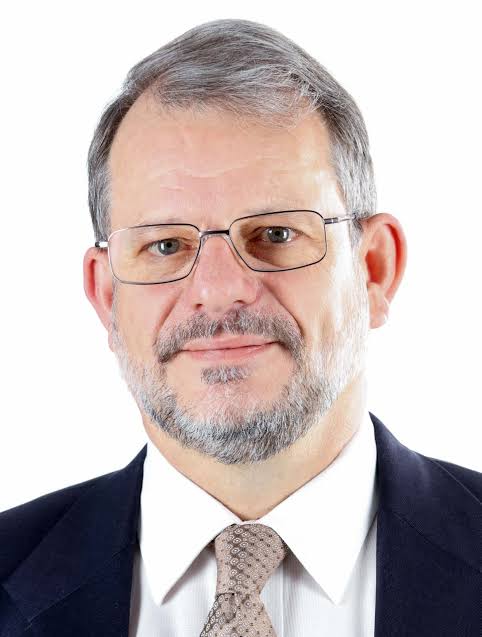
Professor Stephen Cook is a Senior Principal Systems Engineer with Shoal Group Pty Ltd. He is also the Professor of Defence Systems at Adelaide University where he researches and teaches system engineering and complex project management. Until June 2014 he was the Professor of Systems Engineering at the University of South Australia where he led numerous research concentrations for over 15 years. Preceding this he accumulated 20 years of industrial R&D and SE experience spanning aerospace and defence communications systems. In recent years, he has been involved in supporting very large energy transition projects and conducting research and development tasks in digital engineering and enterprise-level systems of systems. Prof Cook, PhD, is an INCOSE Fellow, a Fellow of Engineers Australia, and a Member of the Omega Alpha Association. He is a Past President of the Systems Engineering Society of Australia and is currently the President-Elect of INCOSE.
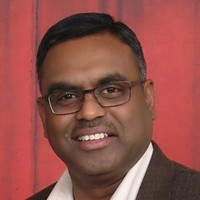
Stueti Gupta,
Co-Founder & Director, BlueKei Solutions Pvt. Ltd.
Dr. Devanandham Henry,
Chief Consultant, BlueKei Solutions Pvt. Ltd.
The discipline of Systems Engineering (SE) is considered to be a combination of Art and Science. SE is also considered to be a "team sport" - systems engineers rarely work in isolation. For this reason, any listing or framework of competencies associated with SE always include non-technical competencies gathered under groups such as professional, management, interpersonal, or mindset - related competencies.
This workshop focuses on three such competencies, that are critical elements in an effective systems engineer's toolkit:
Communication: Systems engineers need to communicate content of different types, with a variety of direct & indirect audiences, and in multiple modes.
Influence: Systems engineers need to be able to make a point and to obtain buy-in. They need to influence the behaviour of others, so that they are able to see the systems perspective.
Decision-Making: Systems engineers must understand the urgency of decisions and the likely consequences of decisions later on in the system's life cycle. The decisions must be taken in a timely manner, often in the face of uncertainty and ambiguity.
The workshop will help participants appreciate the need for systems engineers to be good at these competencies and also learn ways to become better at them, through hands-on individual & group activities.
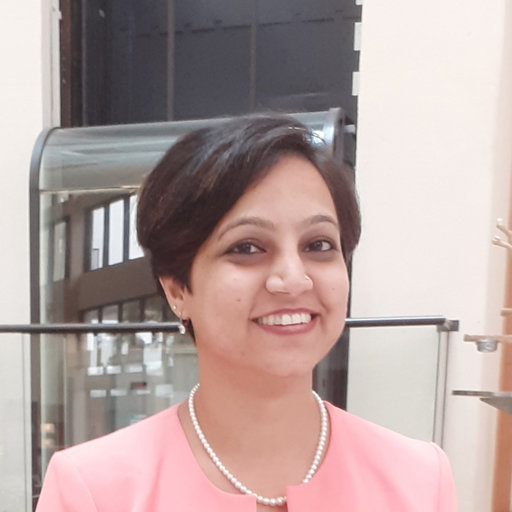
Stueti Gupta is the Co-founder and Director at BlueKei Solutions, and provides consultancy and customized training services to enable leaders, teams, and enterprises to solve engineering problems, embrace emerging technologies and achieve operational excellence. Over her 18+ years' experience in industry and academia she has led SE research projects and co-led SE competency development, largely around MBSE and system dynamics modeling. Stueti has a Mechanical Engineering degree from BITS Pilani, India, a second masters from Cornell University, USA. and a certificate in Systems Design and Management from MIT, USA. She currently serves as Secretary, INCOSE Board of Directors.
Dr. Devanandham Henry is a Chief Consultant at BlueKei Solutions, with a unique mix of experiences from government, academia, industry, complex system development, and research in India and USA over the past 25+ years. He has worked on the Air Force and Naval versions of the Indian Light Combat Aircraft - Tejas and was a member of the core teams that developed the Guide to the Systems Engineering Body of Knowledge (SEBoK) and Atlas: The Theory of Effective Systems Engineers. Deva has a B.Tech. in Aeronautical Engineering from Madras Institute of Technology, Chennai, an M.Tech. in Aerospace Systems Engineering from IIT Bombay and a Ph.D. in Systems Engineering from Stevens Institute of Technology, USA.
| Category | AeroSEC Delegate | Non - AeroSEC Delegate |
|---|---|---|
| Workshop | INR 2000 | INR 4000 |

+91 90146 66161
hyderabad@alpcord.net